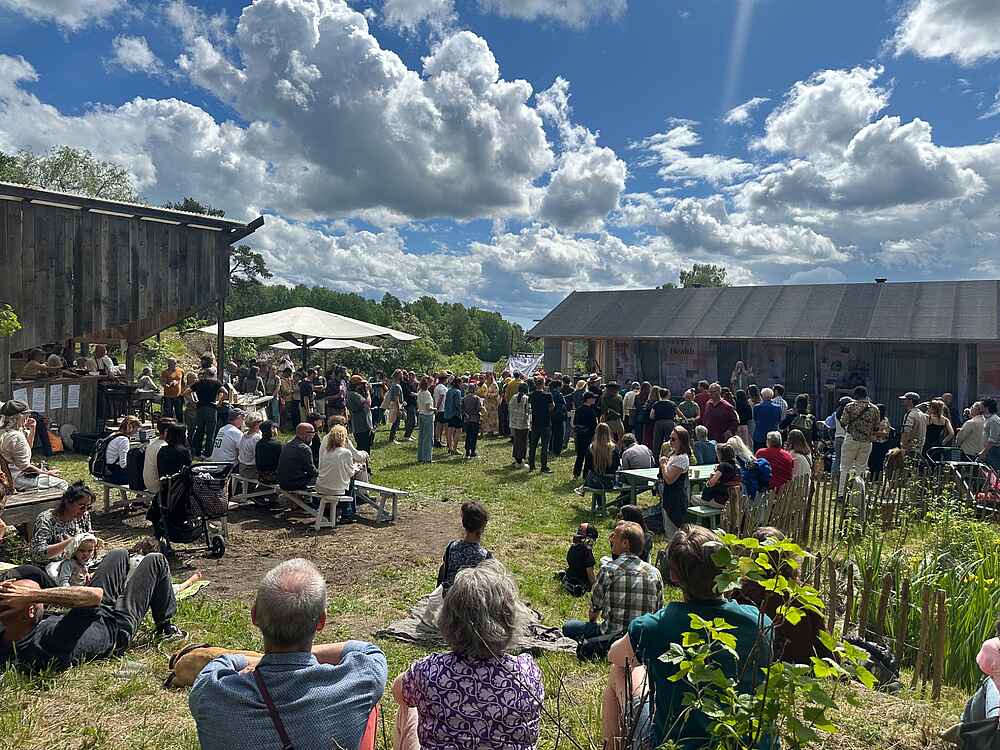
Alongside the WGA, many networks are working to bring about change in the economy. Some of them – such as WeALL or the Next Economy Forum (NEF) - in order to strengthen the movement as a whole. With others, there is overlap because WGA partners are involved, such as Teikei at the Strategic Summit and Summer Food Fest in Sweden. As the WGA, we are currently observing within these networks a drive to better connect the various initiatives, thereby creating a movement strong enough to bring about the urgently needed changes in the economy.
Issues that are also close to our hearts are reflected there in similar or adapted forms – for example, in the work of Tobias Keye, the author of the report on the Strategic Summit and Summer Food Fest in Sweden, where the concept of association extends to shared landscapes.
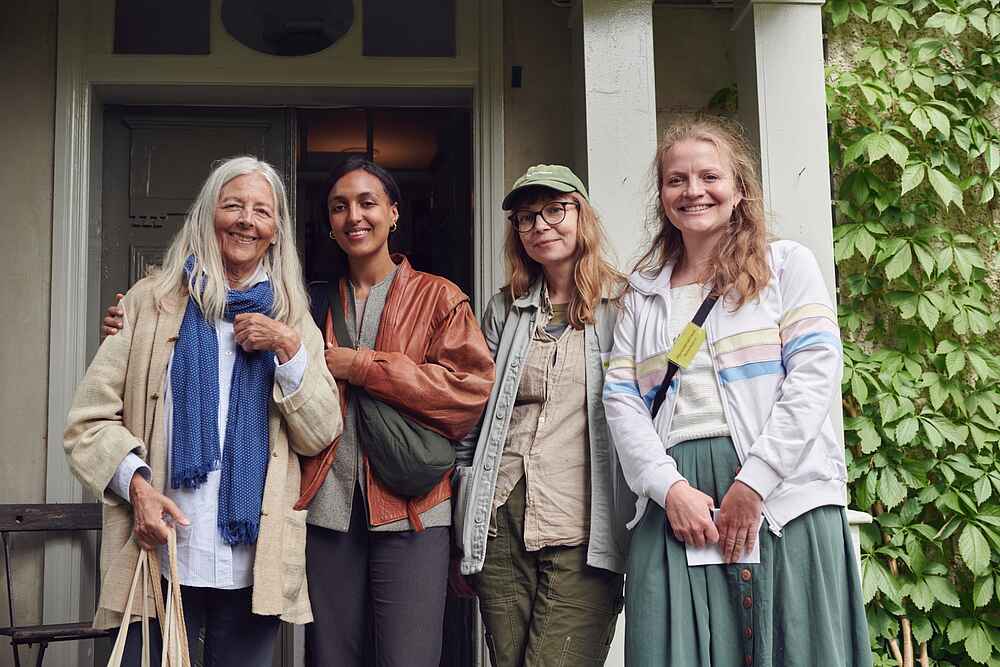
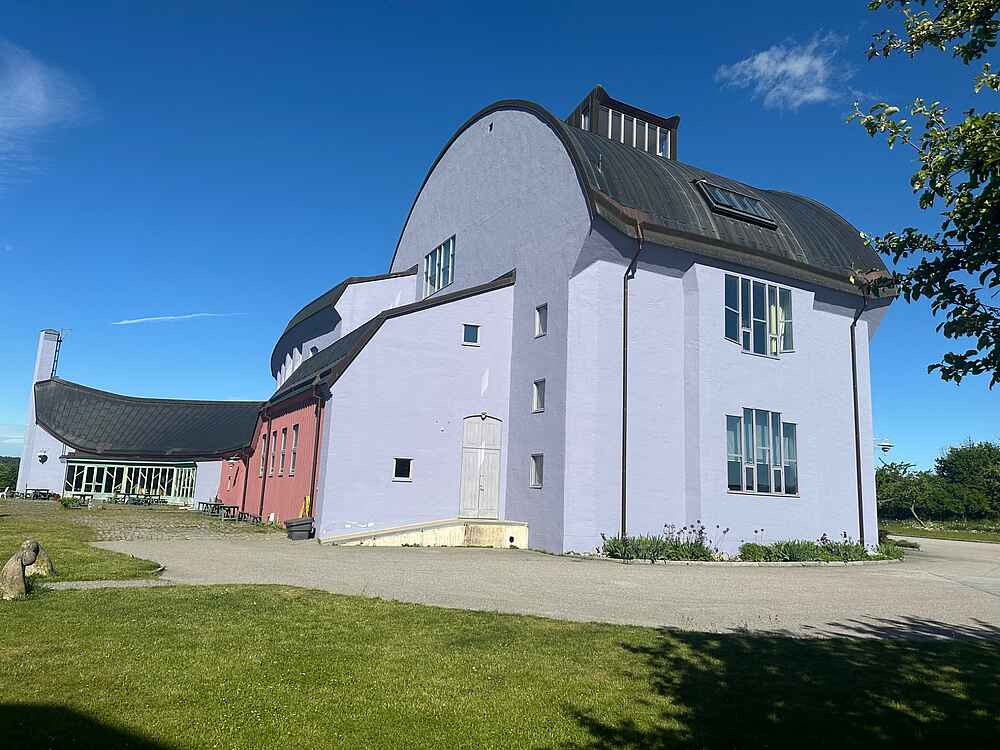
The Strategic Summit and Summer Food Fest made use of a unique social and cultural infrastructure: first in Stockholm at the historic Malmgården Vita Bergen, where biodynamic horticulture and social work now come together, and then in Järna, where a dense, anthroposophically inspired network of biodynamic agriculture, education, culture and architecture has developed over decades. The Summer Food Fest took place at Under Tallarna – an initiative stemming from the community-supported agriculture movement, which is bringing producers and consumers closer together once again.
However diverse the approaches involved may be, they touch upon questions that have long been discussed within the World Goetheanum Association: How can the economy, agriculture, social relationships and responsibility for a place be brought together in a new way?
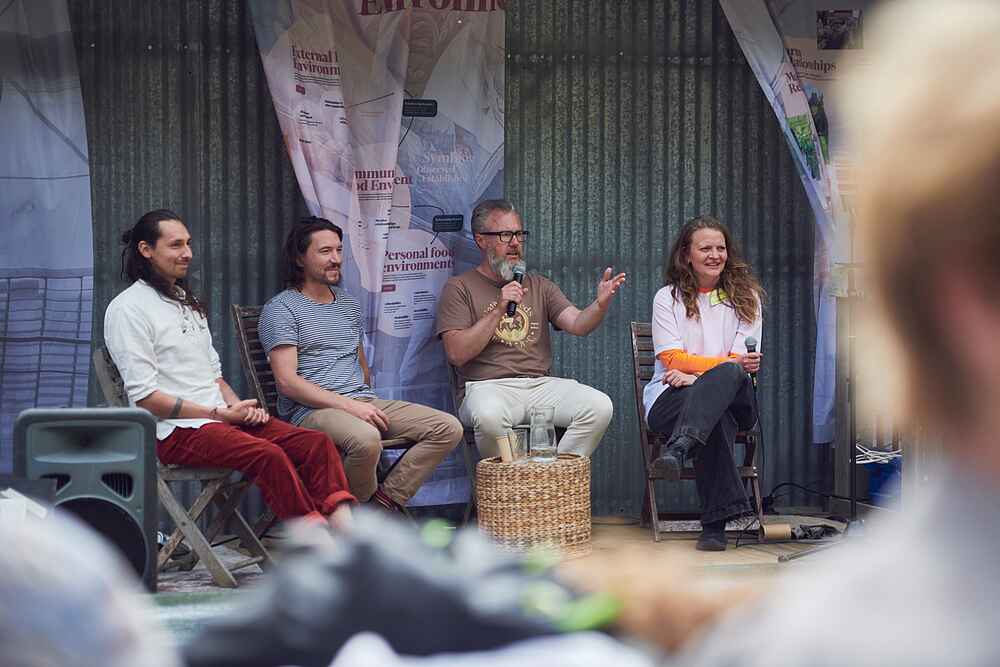
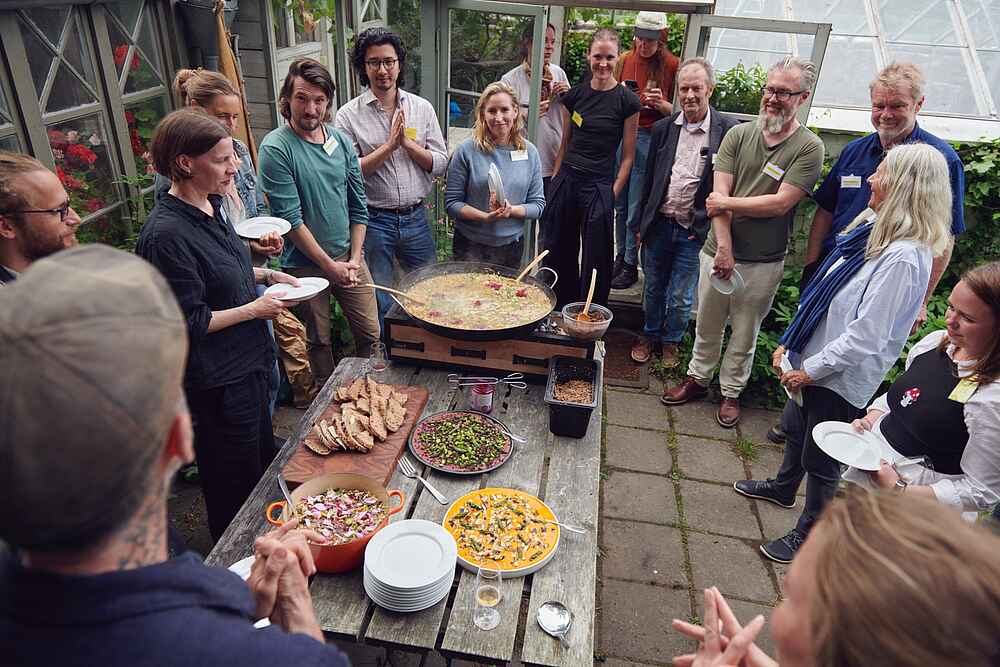
On a wooden board in Järna hung the notes from the Summer Food Fest: seeds, compost, healthy soil, mushrooms, wild plants, decentralised food networks. Next to them was the stage programme featuring Helena Norberg-Hodge, international guests and local initiatives from Sweden. In the centre: a communal lunch, cooked by cooks, bakers, farmers and producers.
Over the course of a single day, it became clear just how many concrete building blocks for alternative food systems already exist.
The day before, Reformaten – a Swedish movement advocating for a research-based transformation of the food system – had joined forces with Local Futures, the international network for localisation led by Helena Norberg-Hodge, to host the Strategic Summit ‘From Globalisation to Localisation – Building a Unified Front’.
The event brought together a remarkable variety of European initiatives: LIVS butik in Stockholm, a member-supported food shop with over 1,600 members and a market experiment led by Sébastien Boudet; REKO, a model originating in Finland for pre-ordered regional food markets via social media, which now has over 2.5 million users worldwide through regional ‘rings’; KVANN, the Norwegian network for seed diversity; WGA partner Teikei Olive and fruits, a community-led initiative; and other stakeholders from politics, civil society and the business sector.
In the background, a new network is taking shape: the ‘European Taskforce for Food System Change’, inspired, amongst other things, by Hansalim, the Korean producers’ and consumers’ co-operative. Alongside those already mentioned, other initiatives are involved, such as Herenboeren, Robin Food – a partner at the last WGA Forum in Sekem – FoodTogether, Bioregional Weaving Labs and Koopernikus. Their guiding principle is: ‘How might we create a great awakening by nurturing communities centred on food and love, based on mutual care, in the most joyful way?’
In Sweden, this principle took on a practical form: not as a ready-made model, but as an international gathering of producers, kitchens, seed banks, shops, co-operatives and European expertise. One of the most important tasks is to make these forces visible to one another.
From individual models to an economy that serves life
What has become apparent in Stockholm and Järna is not an isolated case. In many parts of Europe, initiatives are already underway that are re-establishing links between food, agriculture, regional supply chains, financing and ecosystem restoration. Many of these are still small-scale, in some cases incomplete, and often dependent on individual people. But this is precisely where their strength lies: they demonstrate that transformation does not have to wait until the overarching framework is in place. It begins where people take responsibility and experiment with concrete approaches.
A recent farmer-led study by the European Alliance for Regenerative Agriculture (EARA) points in a similar direction. On the regenerative farms examined, yields were almost on a par with comparable farms, whilst around 62 per cent less synthetic nitrogen and 76 per cent fewer pesticides were used; at the same time, gross margins were higher on average. What is interesting is not so much the individual figure as the approach of understanding productivity more broadly – economic performance alongside soil cover, plant diversity and reduced resource use. New opportunities are also emerging in the political sphere. Denmark is currently demonstrating what is possible when the state sets a clear direction and aligns various stakeholders with it. The 2024 Green three-party agreement brought agriculture, nature, climate and water protection under a single framework; 23 local three-party coalitions are now translating these objectives into concrete land-use plans. The new four-party government is building on this and aims to link agricultural subsidies more closely to benefits for nature, biodiversity, the climate and water, as well as to present a national food strategy in 2027. It will be fascinating to see whether this political framework actually leads to a lasting regional transformation.
At the same time, the funding model is also changing at European level. With the Carbon Removals and Carbon Farming Regulation (CRCF), the EU is establishing a common framework for the certification of carbon removals and carbon farming. It is now going a step further: with a new CRCF Buyers’ Club and a planned facility, the aim is to pool demand and combine public and private funding. For carbon farming, models are also being discussed in which land managers from a region can jointly offer larger-scale projects. This is where the European framework intersects with practical approaches. Alongside such certification frameworks, approaches are emerging that take a different path. The German association Mehr.Wert e.V. is working to make the environmental impacts of products and services financially quantifiable and to contrast them with an ‘environmental value’ for specific ecological enhancement and restoration services — not as a tradable certificate, but as a benchmark for determining who prevents damage and who causes it.
Behind this lies the same economic question: how can those who prevent damage and restore nature gain an advantage, rather than leaving the resulting costs to be borne by the general public? Ultimately, everyone is faced with the same question: how can we create an economy in which the care, conservation and restoration of nature are more profitable than extraction? Businesses are also increasingly addressing this question. At the Sustainable Economy Summit, Kerstin Erbe, dm’s Managing Director for Product Management and Sustainability, called on policymakers to make investments in nature tax-deductible and eligible for tax credits — so that products with a positive ‘footprint’ and ‘handprint’ do not remain permanently more expensive than those whose follow-on costs are borne by the general public.
That would be a new normal: it is not the cheapest extraction method that wins out, but rather the superior value-added performance that pays off economically.
Zurich demonstrates that this is not a distant goal. The Koopernikus co-operative — an alliance of producers, processors, shops and catering businesses — won the contract for the city’s communal catering services through a standard tendering process and has been supplying organic and regional produce to around 160 public establishments, including nurseries and schools, since October 2025. The city has now included organic and regional sourcing as additional criteria in its tenders. First, a supplier demonstrates that it can be done — then the purchaser makes it a requirement.
At the same time, an interesting trend is emerging in the field of financing. Capital markets alone do not automatically find their way into the countryside, onto the farm or into the local community. That is why location-based approaches are increasingly emerging in Europe that no longer aim merely to finance individual projects. Bioregional Financing Facilities, for example, are designed to pool public, private and philanthropic capital over the long term for interconnected projects within a specific landscape. The new CRCF Buyers Club also points in this direction by bringing together demand and regional carbon farming projects.
The convergence of these developments holds enormous potential.
Associative economic activity, as seen in Järna and, for example, in the organic food sector, has demonstrated – across products and value chains – what can be achieved when producers, processors, retailers and consumers align their needs and opportunities more closely. At the landscape level, local authorities, water management bodies, nature conservation organisations and government agencies also play a part, as their decisions affect the same habitat.
However, even the best monitoring systems cannot replace such social infrastructure. They can reveal what is happening to soil, water or biodiversity, make impacts traceable and provide certainty for funding. Yet which measures make sense in a specific location and how to resolve conflicting objectives cannot be determined solely from the outside. This knowledge and capacity for action must develop within the region itself. Shared data can serve as a tool through which a landscape learns from its actions and their impacts over the years.
So what if we were to take this associative line of thinking beyond the product chain? What if a region were not merely to measure and fund individual services, but were to collectively identify the developmental services its landscape requires – and align public funds, businesses, agriculture, nature conservation, as well as private and philanthropic capital, with these needs?
The experience of Stockholm and Järna was therefore also an inspiration for me. Much of what would be needed for this has long since begun to take shape and could become even more visible: relationships, practical models, new metrics and, by now, funding structures that place greater emphasis on the specific locality.
Perhaps this is the question that arises for associative economics today: Can an association centred on a product evolve into an association for a shared landscape?
About the author
Tobias Till Keye, who grew up amidst the socio-economic entrepreneurial initiatives centred around GLS Bank, has been working in the organic trade and food industry since 2007 – from international wholesale and foreign trade to the establishment of the BioBoden cooperative in Western Pomerania. As founder of the Berlin Agency for Sustainable Development – Projekt N – and chair of the Regional Centre of Expertise for Education for Sustainable Development (RCE Stettiner Haff), recognised by the United Nations University, he is currently working on the transformation of agriculture, food systems and ecosystem services – including, in the Oder Delta, on real-world laboratories and new financing models for climate and landscape services.